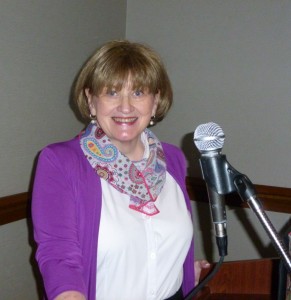
My mother, Ida Stevens Clemens, along with my three sisters Fern, Jean and Betty, joined The Church of Jesus Christ of Latter-day Saints in 1948.
It was in a day when women didn't always go against the wishes of their husbands, especially in West Virginia.
But, mom did.
When two missionaries from the Church knocked on her door, she listened to their brief message and invited them in. Having not been raised in a particular religion, she was intrigued by what they had to say. She writes in her journal:
"So now I have grown older now and have started to go too church by my self and with neighbors to the church nowon as the Jesus only church. And there where I met my husband to be I was 16 year old when I met him we all went to church at the same place he was baptized at one time in the Jesus only church before we were married."
Over a period of time, they returned and taught a series of "discussions", which eventually led to her commitment to be baptized with her girls. She gave up smoking her Camel unfiltered cigarettes. It was during this time that she and my sisters had many dreams that brought comfort to them as they made this decision. They recorded those dreams, and I have transcribed them. But, they are much too personal to let others read them.
They were baptized in the Guyandotte River in Logan, West Virginia. Sister Betty nearly floated away, but they grabbed her by the hair of her head.
Dad was not pleased.
The missionaries had become a bit pushy with him, and he wasn't real sure he liked it. So, like many others in this area of the country, they began to look northward. Dad had three stipulations for any area he would bring his family to:
1. A better job for him.
2. Better education for his three girls.
3. No Mormon church in the area!
On New Year's Day, 1950, they made it as far as Portsmouth, Ohio in a raging blizzard. Dad had an aunt living there, and they waited out the blizzard.
Mansfield, Ohio would become their home. All three of dad's conditions were met.
But, just four months later, Mormon missionaries were assigned to the Mansfield area. They tracted out my mom and sisters, and a small branch was formed.
Dad was befriended by others in this small LDS community. He was a heavy smoker. But, slowly he was beginning to realize that he needed this religion in his life. One day, while helping to put a roof on a church member's home and smoking away, a man teasingly asked him, "Clem, when are you going to give up those cigarettes?"
He looked at him and said, "The one you see me smoking here is the last one you'll ever see me smoke." He threw the butt over the edge and never smoked again.
Dad worked second shift, and Mom would have a pot of coffee waiting on him when he got home at about 11:30 pm. He would drink the whole thing. Mom told him that it was going to kill him, for she could feel the pounding of his heart through the mattress.
Dad was baptized in 1951, and was a faithful member all of his life. He was baptized in the YMCA swimming pool. The following week, they asked them not to meet there again, for the lint from their baptismal suits was clogging up the drains.
The church members complied, and the following week a gas line blew up the building.
I came along in 1955, and dad baptized me when I turned 8 years old.
Mom's decision to go against the wishes of her husband was not a popular one. When dad joined, it was even less popular, for many in his family disowned him. But, her initial decision affected thousands, for thus began her quest for her family's history. Dad would soon join her in that quest.
And, their love of genealogy passed right on down to me.
Always Anxiously Engaged
I have been involved in Family History and Genealogy since before I was born. One of my favorite pictures is of my mother getting ready for an afternoon of cemetery transcribing just four days before my birth!
Sunday, May 19, 2013
Wednesday, May 1, 2013
Wedding Wednesday - Lauritzen/Terry Marriage
What a strikingly beautiful couple!
Peter Lauritzen and Mary Loanna Terry on their wedding day.
22 May 1901
Married in the Manti Temple, Sanpete County, Utah
This young bride and groom would eventually welcome twelve children into their family, with my father-in-law, Orson William Lauritzen being the tenth child.
At some point, it becomes just the two of us again.
Peter and Mary Loanna Terry Lauritzen
And one day, we become single again.
Peter Lauritzen, approximately a year before he died in 1962.
There is no credential war
First let me say that I appreciate the comments that have been made, both publicly and privately, concerning my post of late last evening. It has been lively and enlightening, to say the least.
But, I do want to make one thing abundantly clear, that there was absolutely no intention of pitting the two credentialing programs against each other. None whatsoever. I don't work that way. I am a builder and a lifter, not one who tears down.
A few have made the comment that I must not make an assumption of an entire organization based on the actions of one or a few. Ummm...I'm a Mormon. I have dealt with this all of my life. How many times have the actions of a polygamous community been confused with The Church of Jesus Christ of Latter-day Saints and its teachings? Or a political candidate representing all Mormons? (That was certainly a hotbed! I felt like I was constantly putting out fires during the election.) Or the mainstream news organizations consistently tagging "Mormon" bank robber, or "Mormon" thief, or "Mormon" whatever...instead of just dropping the "Mormon" off completely.
I believe that for me and what I do, maintaining my AG and all of the requirements that go along with it are fine for me. And, not for one moment am I basing one as being superior over the other.
Both bring us as genealogists to a higher level of polishing our skills and helping us to learn things we didn't know we didn't know.
So, to all of my genealogy friends, rest assured that there is no problem. As a matter of fact, the individual that made the remarks still has my respect, for their skills are sorely needed in the professional genealogy world. I will not publicly name the individual to maintain the respect that has been so earned.
Again, I don't work that way.
But, I do want to make one thing abundantly clear, that there was absolutely no intention of pitting the two credentialing programs against each other. None whatsoever. I don't work that way. I am a builder and a lifter, not one who tears down.
A few have made the comment that I must not make an assumption of an entire organization based on the actions of one or a few. Ummm...I'm a Mormon. I have dealt with this all of my life. How many times have the actions of a polygamous community been confused with The Church of Jesus Christ of Latter-day Saints and its teachings? Or a political candidate representing all Mormons? (That was certainly a hotbed! I felt like I was constantly putting out fires during the election.) Or the mainstream news organizations consistently tagging "Mormon" bank robber, or "Mormon" thief, or "Mormon" whatever...instead of just dropping the "Mormon" off completely.
I believe that for me and what I do, maintaining my AG and all of the requirements that go along with it are fine for me. And, not for one moment am I basing one as being superior over the other.
Both bring us as genealogists to a higher level of polishing our skills and helping us to learn things we didn't know we didn't know.
So, to all of my genealogy friends, rest assured that there is no problem. As a matter of fact, the individual that made the remarks still has my respect, for their skills are sorely needed in the professional genealogy world. I will not publicly name the individual to maintain the respect that has been so earned.
Again, I don't work that way.
Tuesday, April 30, 2013
Why I Will Not Seek Certification
I have decided not to become a Certified Genealogist.
Now don't get me wrong. I AM a professional, having been accredited through ICAPGen for nearly fifteen years.
But, that is where it ends.
For several years prior to taking the test for accreditation, I thoroughly researched the difference between becoming certified through BCG (Board for Certification of Genealogists), and even going on to pursue that of being a CGL (Certified Genealogical Lecturer).
There wasn't a lot out there to help me at the time I was seeking the credentials that would identify me as a professional. Accredited Genealogists (AG) seemed to be more of a western thing, for the testing was done by the LDS Church at the Family History Library. Certified Genealogists (CG) seemed to be more well known, but I didn't know if I could pass the testing process.
Actually I didn't know if I could pass either of the testing processes.
I decided to become an AG for the Southern States.
It was one of the hardest things I have ever done. I thought I was fairly good, but this process refined me and polished me. I submitted my paperwork and received word that it had been accepted. The next step would be to make an appointment at the Family History Library. This would not be a problem since we travel to Utah frequently to visit family.
At the time I tested, the Southern States included everything from Virginia to Texas. That was a bit of a problem for me, for I didn't really know much about Texas, or Louisiana, or the other states associated with the deep south.
But, I had to learn.
On a Wednesday in October, I dropped my oldest son off at the Missionary Training Center to leave for a two-year mission, drove to Salt Lake City with tears in my eyes, and began my testing that evening.
Little did I know how difficult the next three days would be. At the end of each day, I had to wait to find out if my test results came back at 90% or above. If they did, I would be invited back for the next day for more testing.
This went on until the final day, which included a minimum of four hours of an oral examination in a room with eight individuals from the Family History Library. Oh, my! I was grilled. I sweated bullets. I twisted in my seat.
But, I passed.
During the last thirty minutes, I was asked to leave the room while they discussed me. I gladly left! Soon, I was invited back in. A question was asked of me: If I were to be granted this Accreditation, what would I do with it?
I answered without pausing. I simply stated that I would take what I learn and teach it to others for the rest of my life.
They concurred that I had indeed passed the necessary requirements, and they felt good about the work I had done.
And, it's enough for me.
I have renewed my credentials every five years, as required. I have had to show that I am keeping up with current trends, both as a genealogist and as a speaker. I keep a spreadsheet showing the classes I have taught, as well as the many opportunities I have had for learning. I have almost as much to submit for renewal as I did at the beginning. I was the last person to be tested by the Church before the testing facility evolved into what is now known as ICAPGen (The International Commission for the Accreditation of Professional Genealogists).
Now, why do I even bring this up?
This past weekend was the annual OGS Conference (Ohio Genealogical Society), of which I am a frequent presenter. I love this event, for it's right here in my home state. People come from all over the country to attend.
A few conversations rolled around to my becoming "double credentialed". In other words, to add being a CG and CGL to my postnomial AG might be a good idea to consider. I was encouraged, for having been a professional for most of my life, it would not be hard to complete the process. However, I left the conference feeling this is not to be.
Though the two credentialing parties have different focuses, they are every bit as stringent. Methodology is used in both cases, with the exception that AG's must test in a specific area. (Since my initial testing, the Southern States have been divided. I am now accredited in the Mid-South.)
One of the last people I talked to before leaving informed me that becoming a CG involved such rigorous testing that I would literally be astounded. Apparently, becoming an AG was a piece of cake compared to becoming a CG. I believe I had just been insulted. And, it takes a lot to insult me. All of the respect I had for this individual suddenly diminished, for it was obvious they had no respect for the process of becoming an AG.
So, I will maintain my status as an Accredited Genealogist and will not seek for more. Some people have no postnomials at all, and are every bit the professional that I am - and even more! I will continue to lift up and build the confidence of my colleagues.
And, I will take what I learn and teach it to others - for the rest of my life.
Now don't get me wrong. I AM a professional, having been accredited through ICAPGen for nearly fifteen years.
But, that is where it ends.
For several years prior to taking the test for accreditation, I thoroughly researched the difference between becoming certified through BCG (Board for Certification of Genealogists), and even going on to pursue that of being a CGL (Certified Genealogical Lecturer).
There wasn't a lot out there to help me at the time I was seeking the credentials that would identify me as a professional. Accredited Genealogists (AG) seemed to be more of a western thing, for the testing was done by the LDS Church at the Family History Library. Certified Genealogists (CG) seemed to be more well known, but I didn't know if I could pass the testing process.
Actually I didn't know if I could pass either of the testing processes.
I decided to become an AG for the Southern States.
It was one of the hardest things I have ever done. I thought I was fairly good, but this process refined me and polished me. I submitted my paperwork and received word that it had been accepted. The next step would be to make an appointment at the Family History Library. This would not be a problem since we travel to Utah frequently to visit family.
At the time I tested, the Southern States included everything from Virginia to Texas. That was a bit of a problem for me, for I didn't really know much about Texas, or Louisiana, or the other states associated with the deep south.
But, I had to learn.
On a Wednesday in October, I dropped my oldest son off at the Missionary Training Center to leave for a two-year mission, drove to Salt Lake City with tears in my eyes, and began my testing that evening.
Little did I know how difficult the next three days would be. At the end of each day, I had to wait to find out if my test results came back at 90% or above. If they did, I would be invited back for the next day for more testing.
This went on until the final day, which included a minimum of four hours of an oral examination in a room with eight individuals from the Family History Library. Oh, my! I was grilled. I sweated bullets. I twisted in my seat.
But, I passed.
During the last thirty minutes, I was asked to leave the room while they discussed me. I gladly left! Soon, I was invited back in. A question was asked of me: If I were to be granted this Accreditation, what would I do with it?
I answered without pausing. I simply stated that I would take what I learn and teach it to others for the rest of my life.
They concurred that I had indeed passed the necessary requirements, and they felt good about the work I had done.
And, it's enough for me.
I have renewed my credentials every five years, as required. I have had to show that I am keeping up with current trends, both as a genealogist and as a speaker. I keep a spreadsheet showing the classes I have taught, as well as the many opportunities I have had for learning. I have almost as much to submit for renewal as I did at the beginning. I was the last person to be tested by the Church before the testing facility evolved into what is now known as ICAPGen (The International Commission for the Accreditation of Professional Genealogists).
Now, why do I even bring this up?
This past weekend was the annual OGS Conference (Ohio Genealogical Society), of which I am a frequent presenter. I love this event, for it's right here in my home state. People come from all over the country to attend.
A few conversations rolled around to my becoming "double credentialed". In other words, to add being a CG and CGL to my postnomial AG might be a good idea to consider. I was encouraged, for having been a professional for most of my life, it would not be hard to complete the process. However, I left the conference feeling this is not to be.
Though the two credentialing parties have different focuses, they are every bit as stringent. Methodology is used in both cases, with the exception that AG's must test in a specific area. (Since my initial testing, the Southern States have been divided. I am now accredited in the Mid-South.)
www.icapgen.org
One of the last people I talked to before leaving informed me that becoming a CG involved such rigorous testing that I would literally be astounded. Apparently, becoming an AG was a piece of cake compared to becoming a CG. I believe I had just been insulted. And, it takes a lot to insult me. All of the respect I had for this individual suddenly diminished, for it was obvious they had no respect for the process of becoming an AG.
So, I will maintain my status as an Accredited Genealogist and will not seek for more. Some people have no postnomials at all, and are every bit the professional that I am - and even more! I will continue to lift up and build the confidence of my colleagues.
And, I will take what I learn and teach it to others - for the rest of my life.
Tuesday, April 9, 2013
It all went up in smoke...well, almost all
It was just about 18 months after my mom died in 1984 that my dad went on a research trip to Kentucky. My parents were wonderful genealogists, and had acquired many first-hand accounts from people that were born in the mid-1800's.
When dad returned, the only thing left standing on his property was the front door and the front wall of his house. Lightning had struck the house and burned it to the ground.
Mom and Dad in front of their cabin in Bath, Ohio
The local fire department had been there and did what they could, but most everything was gone.
Shortly afterward, I went through the remains with dad to see if anything could be salvaged. Behind the front door were wooden bookshelves that housed all of the research that he and mom had done. It should have burned. But, it didn't.
There were some smoke stains and some water damage, but nearly everything was salvageable.
Little Peggy at Kingwood Center. You can see some of the smoke damage on the edges
There was also a tall chest of drawers with the bottom four drawers burned. We pried open the top three, and there was all of his underwear. He said with his genealogy and his underwear and K-Mart, he would be just fine.
Nearly five years later, I received a letter out of the blue from a man in California. He had corresponded with my mother up until her death. He had found my name on the old "Family Registry" on microfiche at the Family History Center and wanted to know who I was. We connected.
The one bit of genealogy that was pretty much unusable from the fire was the Cline genealogy. But, this man had it all, for he and mom had what each other had. His information made ours complete.
It was not by happenstance. Never.
Wednesday, March 13, 2013
Women's History Month - #13
March 13 — Moment of Strength: share a story where a female
ancestor showed courage or strength in a difficult situation.
Again, my mother is at the top of my list on this one!
My parents were raising their three little girls in the coal camps of West Virginia when Dad was drafted into the Navy. He was the only one in the coal camps to be drafted.
This left my mom and my three older sisters to fend for themselves while Dad was away at Pearl Harbor. Fern, Jean and Betty would have been around the ages of 7, 5 and 2 years old.
They were poor to begin with, and even poorer after Dad left. Mom managed to keep everyone fed, mostly with beans. Occasionally, the local butcher would see Mom coming and put back a nice piece of meat for her, assuring her that it wasn't horsemeat.
During this time, Mom also became very sick. Her father heard about it and came over from Kentucky to help care for her. When it became apparent that she was indeed, very, very sick, he made arrangements to have her taken to Columbus, Ohio and he brought the girls back home to Kentucky. Mom had a very serious goiter that was wrapping itself around her throat, threatening to strangle her. She lost a tremendous amount of weight, and it took a long time to recover.
For the remainder of her life, her neck bore a large scar that went from one side to the other where they had to operate to save her life.
Tuesday, March 12, 2013
Women's History Month - #12
March 12 — Working girl: Did your mother or grandmother work
outside the home? What did she do? Describe her occupation.
Mom stayed home.
Her mom stayed home.
For a time period, she did work at cleaning houses. She named me after one of the women whose home she cleaned - Peggy Sternbaum.
She also worked for awhile in the cafeteria of my grade school. I was always secretly excited when I would see her working, for it was a part-time job. She worked when she was called in. It always bothered her to see the amount of food wasted.
Image from Google, not my mother
Mom was always at home when I was at home. She was there to get me off to school in the mornings, and was there when I returned afterward. She kept the home running, just like her own mother had done.
Subscribe to:
Posts (Atom)
.jpg)


